MY EX-HUSBAND CALLED ME AN “UNFIT MOTHER” AND DEMANDED FULL CUSTODY OF OUR CHILDREN.

The courtroom was called back into session later that afternoon.
By then, Daniel’s confidence had disappeared.
He sat beside his attorney, staring at the floor.
Judge Margaret Ellis entered carrying a folder.
“This court has reviewed the preliminary evidence concerning the children’s trust,” she said.
I held my breath.
The judge explained that investigators had found communications between Daniel and another person discussing the trust.
They had also discovered that Daniel had been researching ways to gain financial control over assets belonging to the children.
The evidence didn’t prove that every accusation against me was fabricated.
But it raised a serious question:
Was the custody request really about the children’s welfare?
Daniel’s attorney tried to argue that the communications had been misunderstood.
But then the court reviewed additional evidence.
There were messages discussing how a custody order could potentially change who controlled certain financial decisions involving the children.
Daniel had also discussed the possibility of using the trust to cover personal financial obligations.
I felt sick.
For months, I had wondered whether I had somehow failed my children.
Now I understood why Daniel had suddenly become so determined to obtain full custody.
It wasn’t simply about being their father.
Money had become part of his motivation.
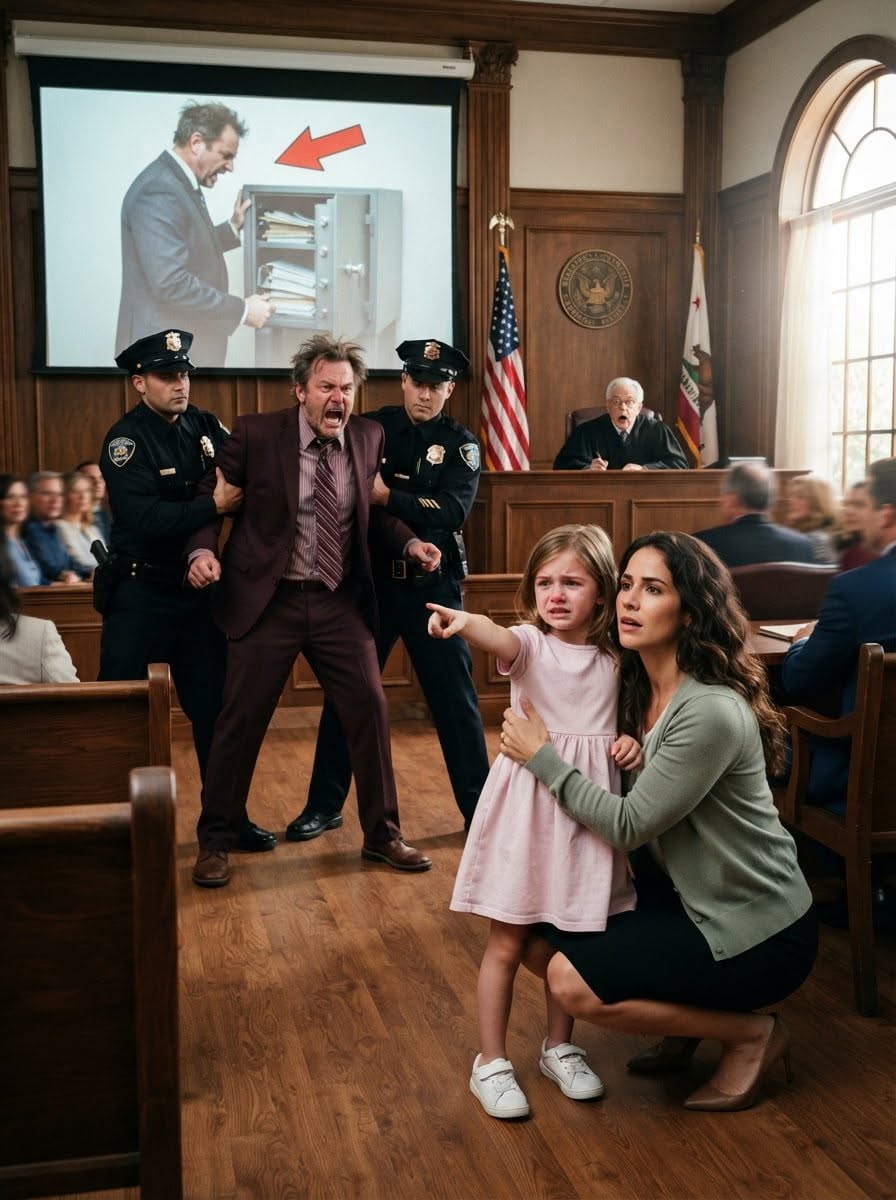
Judge Ellis looked directly at him.
“Mr. Mitchell, do you deny discussing the children’s trust?”
Daniel remained silent.
His attorney leaned toward him.
Daniel finally whispered,
“I was desperate.”
Judge Ellis responded calmly.
“Financial difficulties do not justify attempting to obtain control of funds intended for children.”
Daniel lowered his head.
Then something unexpected happened.
Ava reached for my hand.
I squeezed it.
Judge Ellis looked at both children.
“I want to make something very clear,” she said. “None of this is the responsibility of these children.”
Ava looked up.
“I just didn’t want Mommy to leave us.”
The words broke my heart.
I leaned down and kissed her forehead.
“I’m not going anywhere.”
Judge Ellis ultimately ordered that the children remain primarily in my care while the court conducted further proceedings concerning Daniel’s behavior and the trust.
Daniel was still allowed appropriate contact with the children under the court’s orders, but financial control over their trust was protected.
The custody battle did not end that day.
There were more hearings.
More documents.
More difficult conversations.
But the most important thing had already happened.
My children had been heard.
And I realized something I would never forget:
Sometimes children don’t understand complicated legal documents.
They don’t understand financial trusts.
They don’t understand courtroom strategy.
But they understand when something feels wrong.
Ava’s honesty had not “won” the case by itself.
The court still needed evidence.
Adults still had to investigate the facts.
But her words had opened the door to questions that needed answers.
Months later, the court finalized the custody arrangement.
The children’s trust remained protected for their future.
Daniel eventually admitted that his financial problems had influenced his decisions.
He apologized to the children.
I didn’t tell them to hate him.
I never wanted them to carry the weight of our marriage.
Instead, I told them something simple:
“Your job is to be children. The adults will handle the rest.”
Ava nodded.
Then she asked if she could keep her butterfly clip on during the next school picture.
I laughed through my tears.
“Of course.”
She smiled.
And for the first time in months, our home felt peaceful again.
Years later, Ava would barely remember the details of that courtroom.
But I would always remember the little girl in the pale blue dress who found the courage to speak when everyone else was afraid.
She didn’t speak because she understood money.
She spoke because she wanted to protect her family.
And that taught me something powerful:
A child’s voice may be small, but the truth behind it can be impossible to ignore.