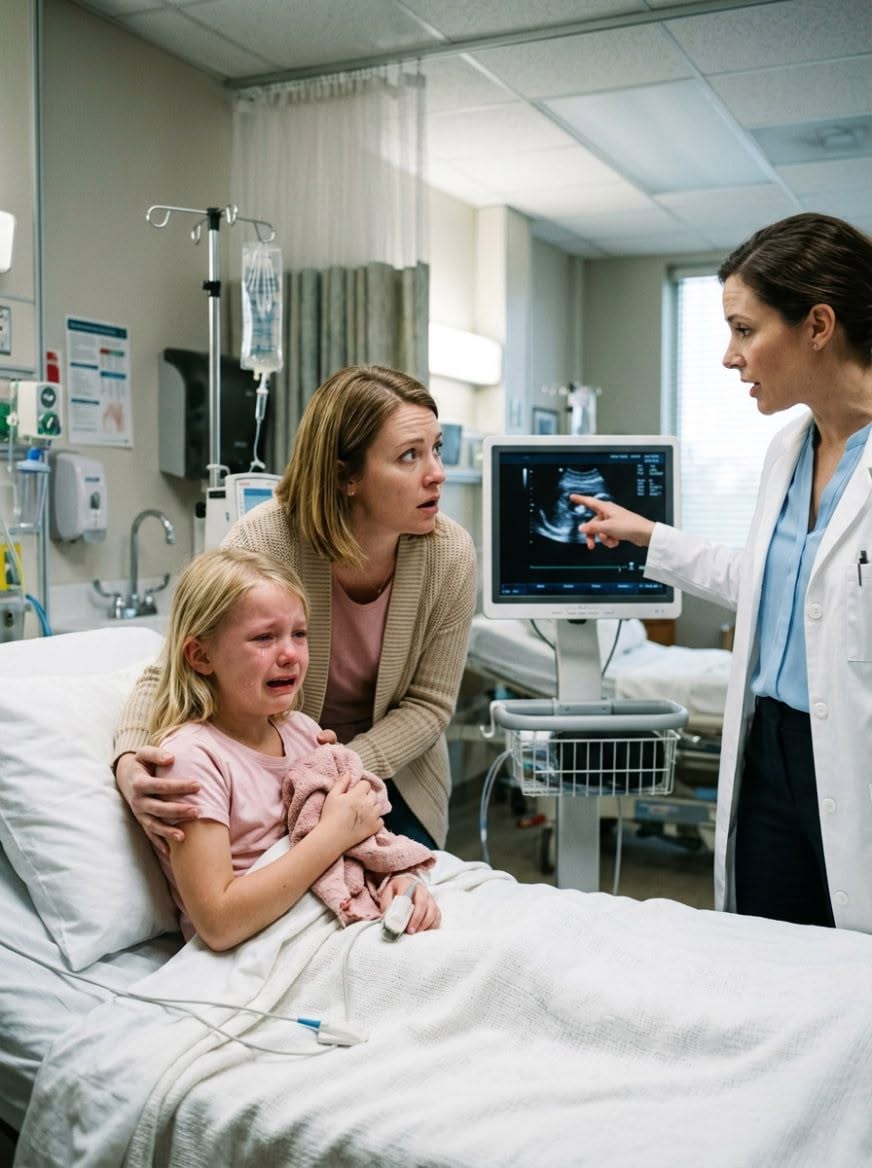
💔 MY 15-YEAR-OLD DAUGHTER KEPT COMPLAINING ABOUT STOMACH PAIN — MY HUSBAND SAID SHE WAS PRETENDING. THEN THE DOCTOR LOOKED AT HER SCAN AND WHISPERED, “THERE’S SOMETHING INSIDE HER…”

💔 THE DOCTOR POINTED TO ONE SMALL DETAIL ON MY DAUGHTER’S SCAN — AND SUDDENLY, EVERYTHING MY HUSBAND HAD SAID MADE SENSE.
I couldn’t take my eyes off the screen.
The scan showed an abnormal mass in Emma’s abdomen.
But the doctor wasn’t looking at the mass anymore.
She was looking at something beside it.
“What is that?” I whispered.
She zoomed in.
“This,” she said carefully, “is what concerns me.”
My heart pounded.
“What?”
“There appears to be evidence that this has been affecting her for quite some time.”
I felt tears burning my eyes.
“How long?”
“I can’t give you an exact timeline yet. We need more testing.”
I looked toward Emma.
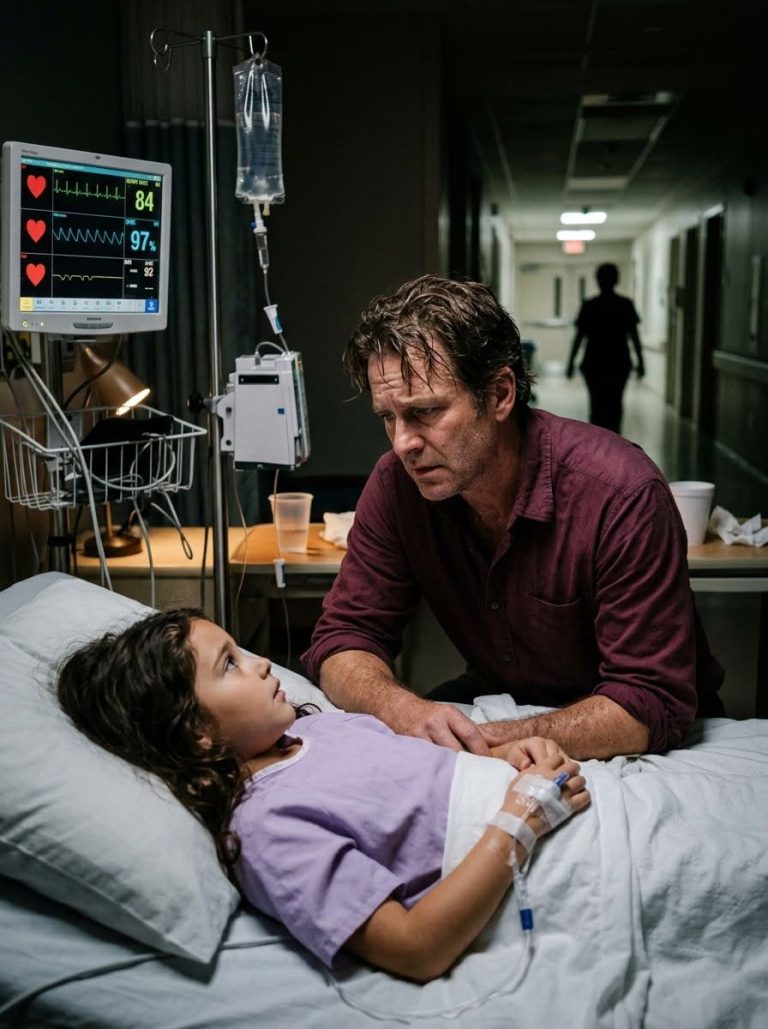
She was lying quietly on the hospital bed.
Her face was pale.
She looked frightened.
I took her hand.
“I’m here.”
She squeezed my fingers.
Then the doctor asked me something unexpected.
“Has Emma ever had any previous medical examinations for these symptoms?”
I shook my head.
“No.”
The doctor frowned.
“Are you sure?”
“Yes.”
She glanced at the chart.
“Her symptoms suggest she should have been evaluated earlier.”
Those words hit me harder than anything else.
Earlier.
I thought about every time Emma had told us she was hurting.
Every morning she had felt sick.
Every night she had curled up in bed.
And every time David had dismissed her.
I suddenly felt angry.
Not because the doctors had found something.
But because my daughter had been telling us something was wrong.
And I had almost allowed myself to believe she was exaggerating.
The next several hours were a blur.
More blood tests were ordered.
Specialists came in.
They explained that the mass needed further evaluation and that surgery might be necessary depending on the results.
Nothing was certain yet.
But one thing was clear.
Emma’s pain was real.
She had never been pretending.
I stayed beside her.
Then my phone rang.
It was David.
“Where are you?”
I looked at Emma.
“At the hospital.”
Silence.
“What?”
“Emma is being evaluated.”
His voice changed immediately.
“What did you do?”
I felt something inside me snap.
“What did I do?”
“You took her to the hospital without telling me?”
“She was sick.”
“I told you she was fine.”
“No, David.”
My voice shook.
“You told me she was pretending.”
He became defensive.
“You’re overreacting.”
I looked at my daughter.
“No.”
I said the word quietly.
“But this time, I’m not listening to you.”
I ended the call.
A few minutes later, the doctor returned.
She had the preliminary results.
“The mass appears to be a benign growth,” she explained. “But we cannot confirm everything until we complete the remaining tests.”
I almost collapsed with relief.
“Benign?”
“It appears so.”
I covered my face and cried.
Emma started crying too.
For the first time in months, the fear in her eyes seemed to loosen.
But then the doctor added something.
“There’s also significant inflammation surrounding the area.”
“What caused that?”
“We’re still investigating.”
Emma suddenly spoke.
“Mom?”
I turned toward her.
“I need to tell you something.”
Her voice was barely audible.
“What is it?”
She looked toward the door.
“Dad knew.”
My heart stopped.
“What?”
Emma began crying.
“He knew I was sick.”
I stared at her.
“What do you mean?”
She wiped her cheeks.
“A few months ago, I told him I was having pain.”
I felt numb.
“What did he say?”
“He told me not to tell you.”
My entire body went cold.
“Why?”
“He said you would panic.”
I couldn’t speak.
Emma continued.
“He gave me some medicine from his office.”
“What medicine?”
“I don’t know.”
My mind raced.
David didn’t work in medicine.
Why would he have given our daughter medication?
“Did it help?”
“For a little while.”
“And then?”
“The pain came back.”
I stood there frozen.
The doctor had been listening.
She immediately asked Emma to describe the medication.
Unfortunately, Emma couldn’t remember its name.
But she remembered something else.
“It was in a small white bottle.”
The doctor looked concerned.
“Did your father give you anything else?”
Emma nodded.
“He told me not to tell Mom because she would waste money taking me to doctors.”
Tears filled my eyes.
I realized then that this wasn’t simply about David being dismissive.
He had actively discouraged our daughter from seeking medical care.
And I needed to know why.
That evening, I returned home alone.
David was sitting in the living room.
He looked angry.
“You embarrassed me today.”
I stared at him.
“Our daughter is sick.”
“She isn’t dying.”
“You don’t know that.”
“The doctors said it was probably benign.”
“Probably.”
He looked away.
I stepped closer.
“What did you give Emma?”
His face changed.
“What?”
“Medicine.”
He said nothing.
“What did you give her?”
“I don’t remember.”
“You told her not to tell me.”
His jaw tightened.
“She was being dramatic.”
“She was fifteen.”
I could barely control my voice.
“She was scared, David.”
For several seconds, neither of us spoke.
Then he finally admitted it.
“I gave her something for the pain.”
“What?”
“Something over the counter.”
“Why didn’t you tell me?”
“Because I knew you’d turn it into a crisis.”
I stared at the man I had been married to for years.
Then I understood something.
The worst part wasn’t that he had
been wrong.
It was that he had decided his judgment mattered more than our daughter’s voice.
I packed a bag for Emma and myself that night.
Not because I knew what would happen next.
But because I knew one thing with absolute certainty.
My daughter would never again be told to ignore her own pain simply because someone else found it inconvenient.
Over the following weeks, Emma received treatment and continued follow-up care.
The final diagnosis was not the nightmare we had feared.
The mass was benign.
It could be treated.
And slowly, Emma began getting better.
Her appetite returned.
Her color came back.
She started laughing again.
One afternoon, I found her sitting at the kitchen table drawing.
I stopped in the doorway.
She looked up.
“Mom?”
“What are you drawing?”
She smiled.
“A house.”
I walked closer.
The drawing showed a small house surrounded by flowers.
But there was something different about it.
There were no dark windows.
No locked doors.
No one standing outside alone.
I sat beside her.
“You know something?”
“What?”
“You were brave.”
She
shook her head.
“I was scared.”
“Being brave doesn’t mean you weren’t scared.”
She leaned against my shoulder.
“I just wanted someone to believe me.”
I wrapped my arms around her.
“I believe you.”
She smiled.
And in that moment, I realized the lesson wasn’t only about illness.
Sometimes children don’t need adults to immediately have all the answers.
They need someone willing to listen.
Someone willing to say:
I believe you.
Let’s find out what’s wrong.
You don’t have to face this alone.
David and I eventually separated.
There were difficult conversations, painful decisions, and consequences neither of us could avoid.
But my relationship with Emma became stronger than ever.
Months later, she stood in front of the mirror, fixing her hair before school.
She looked healthier.
Happier.
More like the girl she used to be.
“Mom?”
“Yes?”
“Thank you for taking me to the hospital.”
I smiled.
“You don’t have to thank me for believing you.”
She hugged me.
And as I held my daughter, I thought about the words that had haunted me for months:
She’s pretending.
She’s exaggerating.
Don’t waste time.
Those words almost convinced me to ignore the one thing that mattered most.
My daughter’s voice.
And I’ll never make that mistake again.
Because sometimes, the person everyone tells you to ignore is the very person who needs you to listen the most.
❤️ If you have a child who says something feels wrong, listen. Ask questions. And when necessary, get help.
Sometimes believing them is the first step toward saving them.