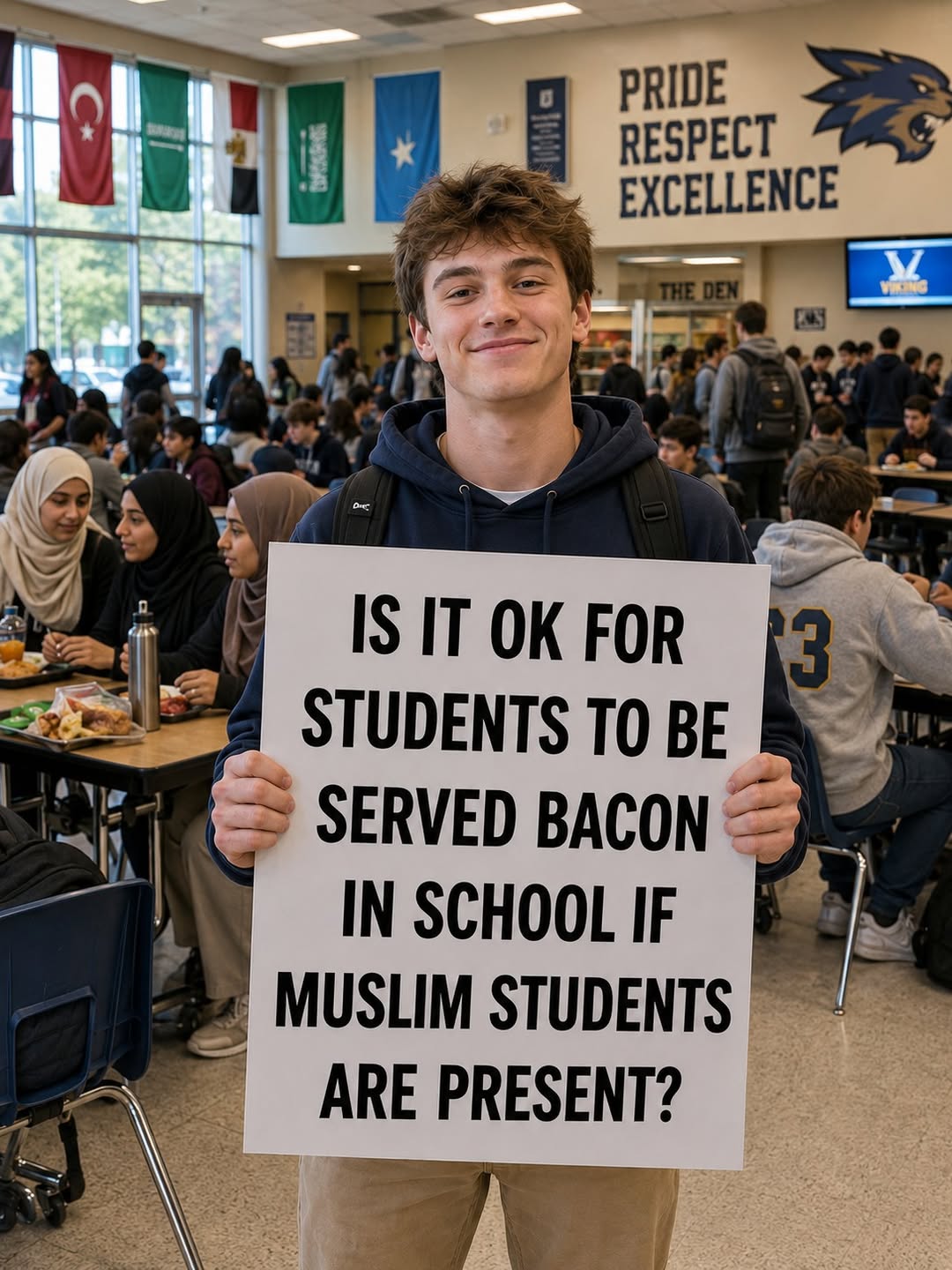
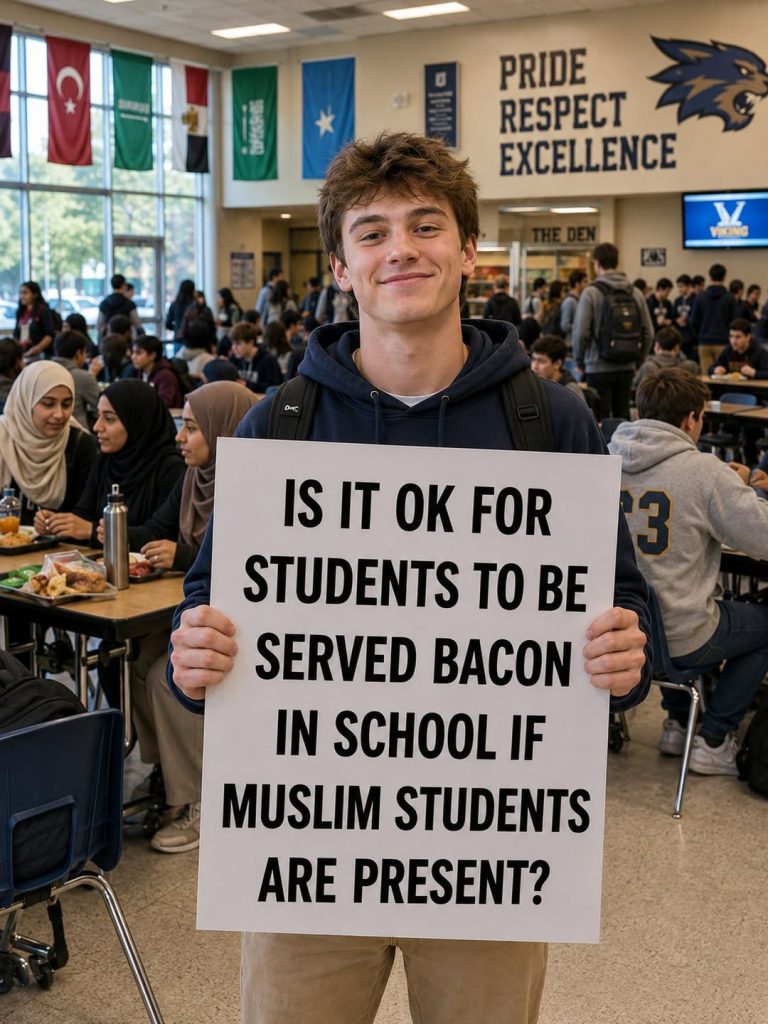
Should Schools Stop Serving Bacon Because Some Students Can’t Eat It? This Question Is Sparking Debate Across America.
 ” 🥓🇺🇸
” 🥓🇺🇸
It may seem like a simple cafeteria menu choice, but for many Americans, it raises much bigger questions about religious freedom, personal choice, inclusion, and how public schools should serve diverse communities.
Should schools continue serving bacon as they always have? Should menus be adjusted to accommodate students with religious dietary restrictions? Or is there a way to respect everyone’s beliefs without taking options away from anyone?
Before making up your mind, read the full story.
🏫🥓 School Cafeterias, Religious Diversity, and Personal Choice
Across the United States, public schools serve millions of students from a wide variety of cultural, religious, and family backgrounds. As communities become more diverse, schools are increasingly faced with questions about how to accommodate different dietary needs while continuing to offer practical meal options.
One topic that occasionally comes up is whether schools should serve pork products, such as bacon, when some students—including many Muslims and Jews—do not eat pork for religious reasons.
For some people, the answer is straightforward.
They believe schools should continue serving bacon and other pork products as one of many available meal choices. Their view is that students who choose not to eat pork can simply select another meal, and removing menu items for everyone is unnecessary.
Others take a different perspective.
They argue that schools should make every reasonable effort to ensure all students feel included and have appealing meal options that align with their religious or cultural beliefs. Rather than eliminating bacon entirely, they often support offering alternative choices so every student can participate comfortably in school meals.
In practice, many schools across the United States already follow this approach.
Instead of banning specific foods, cafeterias frequently provide multiple meal options. A student who eats pork may choose bacon or sausage, while another student may select turkey bacon, beef sausage, vegetarian options, eggs, fruit, yogurt, or other alternatives.
This allows students and families to make personal choices according to their own beliefs.
The discussion often extends beyond food itself.
It raises broader questions about how a diverse society balances individual freedoms with respect for different cultures and religions.
Many Americans believe respecting another person’s beliefs does not require giving up their own traditions.
Others emphasize that public institutions should strive to accommodate everyone as fairly as possible whenever practical.
Public schools also have legal responsibilities. They generally cannot favor one religion over another, and they often work to provide reasonable accommodations for students with documented dietary, religious, or medical needs when feasible.
At the same time, schools must manage budgets, nutrition requirements, food availability, and the practical realities of serving hundreds or even thousands of meals each day.
As a result, there is rarely a one-size-fits-all solution.
Different school districts may adopt different policies depending on their student population, available resources, and community preferences.
For many families, the goal is simple:
Children should have nutritious meals.
Students should feel respected.
Parents should retain the freedom to guide their children’s dietary choices.
Schools should strive to create an environment where students from many different backgrounds can learn together while respecting one another’s differences.
Whether someone believes bacon should remain on school menus or thinks schools should rely more heavily on alternative options, most people agree that respectful discussion is more productive than division.
In a country as diverse as the United States, finding practical solutions often means balancing personal freedom, religious accommodation, and the everyday realities of operating public schools.
💬 What do you think?
Should public schools continue serving bacon while offering alternative meal choices for students who don’t eat pork, or should school menus be handled differently? Share your opinion respectfully and join the conversation. 🇺🇸