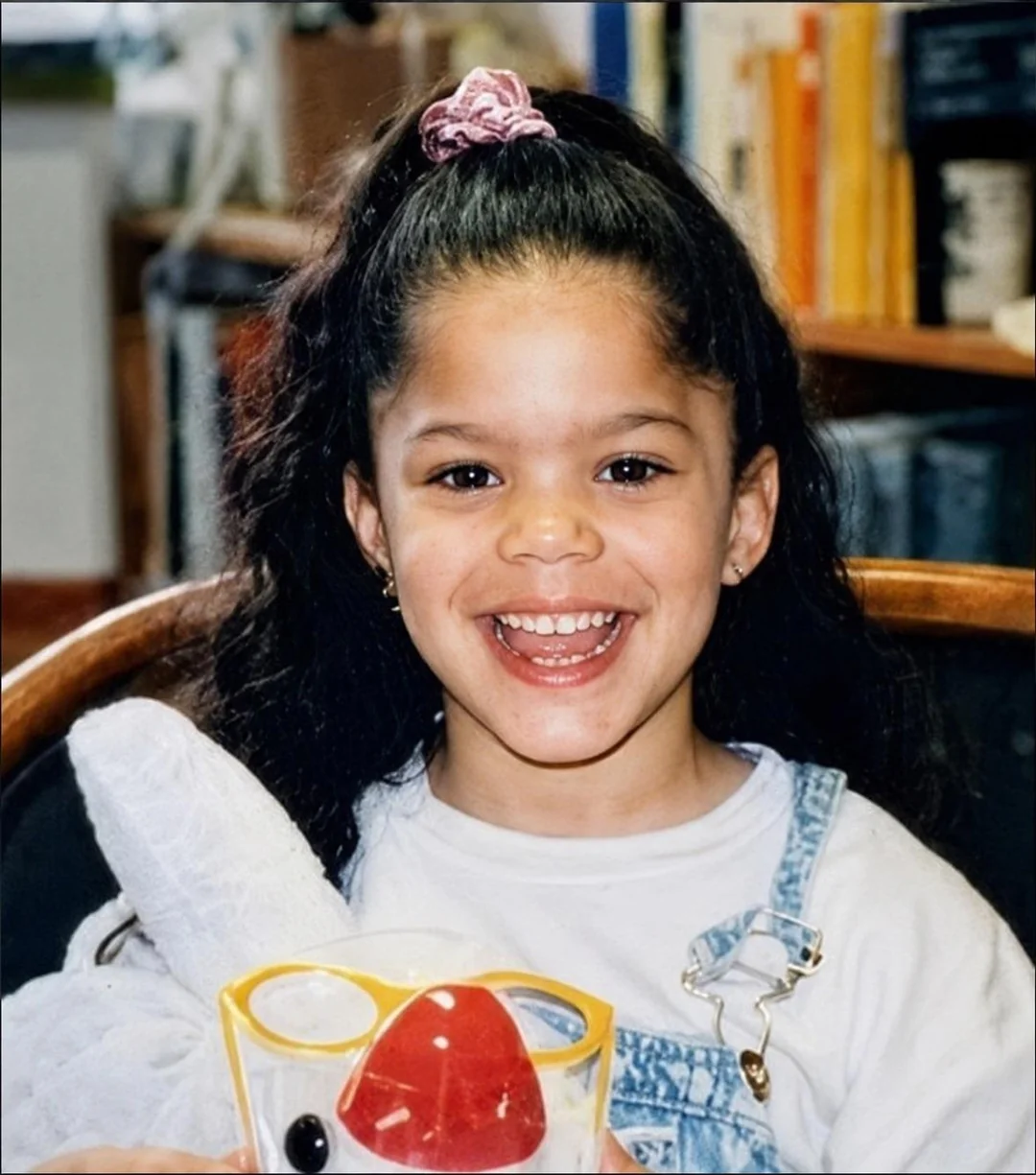
In 1995, 6-year-old Elisa Izquierdo died after years of horrific abuse. Her family and teachers fought to save her, but the system failed her.
In 1995, 6-year-old Elisa Izquierdo died after years of horrific abuse. Her family and teachers fought to save her, but the system failed her.
 Elisa Izquierdo was born on February 11, 1989, in Brooklyn, New York.
Her father, Gustavo Izquierdo, was a Cuban immigrant who had come to the United States hoping to become a dance teacher. Her mother, Awilda Lopez, was Puerto Rican.
The two had met at a homeless shelter in Fort Greene, where Gustavo worked part time. Awilda was staying there after losing her apartment and was struggling with a serious crack cocaine addiction.
 Their relationship reportedly ended after Gustavo discovered that Awilda was still using crack while pregnant with Elisa. By January 1989, she had already lost custody of her two older children because of her drug use.
When Elisa was born, social workers reported that she had been exposed to crack cocaine in the womb and was born dependent on the drug.
Because of Awilda’s addiction, Gustavo was given full custody.
Although he had never raised a child before, everyone around him described him as a loving and devoted father. He took parenting classes, asked relatives for advice, and made sure Elisa’s birthdays were celebrated.
When she was four, he even rented a banquet hall for her baptism.
A family friend later said, “Elisa was his life. He always called her his princess.”
In 1990, Gustavo enrolled Elisa in a Montessori preschool. As his health began to decline, however, paying for her education became more difficult.
 Elisa quickly stood out as a bright and promising student. In 1993, her teachers introduced her to Prince Michael of Greece, one of the school’s patrons.
According to reports, Elisa ran into his arms when he arrived and stayed close to him for the rest of the day.
Prince Michael later offered to pay her tuition at the private Brooklyn Friends School through 12th grade. Elisa thanked him with a handwritten note. He occasionally sent her small gifts afterward, and she would reply with drawings or thank you notes.
Meanwhile, a social worker reported that Awilda had overcome her addiction, found permanent housing on Manhattan’s Lower East Side, and married Carlos Lopez. After giving birth to another daughter, she regained custody of her two older children in December 1990.
 In November 1991, Awilda was granted unsupervised visits with Elisa every other weekend.
What happened during those visits should have raised alarms.
According to relatives, Awilda’s older children said that Elisa was being beaten and neglected by her mother and stepfather. At first, no one reported it.
Each time Elisa returned, however, the signs became harder to ignore.
Gustavo and her teachers noticed bruises and other injuries, including in intimate areas. Elisa told them that her mother hit her and locked her in a closet.
She also said she did not want to go back.
Her fear began showing in other ways. She wet the bed, lost control of her bowels, and suffered nightmares whenever another visit was approaching. One family acquaintance said Elisa often vomited after returning and refused to enter bathrooms.
She was still very young, but the fear was already showing in everything she did.
 Gustavo and Elisa’s teachers reported the abuse. Elisa also told a social worker herself what was happening.
In 1992, Gustavo asked the court to end Awilda’s visitation rights.
But the visits were allowed to continue.
The only condition was that Awilda was not supposed to hit or hurt her.
In 1993, Gustavo began making plans to return to Cuba with Elisa. He bought plane tickets for May 26, 1994.
Before they could leave, Gustavo was hospitalized with severe breathing problems and later diagnosed with lung cancer.
He died on May 26.
The exact day he and Elisa were supposed to leave for Cuba together.
Not long afterward, Elisa asked her mother where her father was.
Awilda screamed back, “Your father is dead!”
After Gustavo’s death, Elisa’s school director, Phyllis Bryce, contacted a family court judge. She and other members of the school staff were deeply worried about what would happen if Awilda gained custody.
Awilda applied for full custody and was initially granted temporary custody.
Gustavo’s cousin, Elsa Canizares, challenged the decision and asked to take Elisa in herself, pointing to the abuse Elisa had already suffered during visits with her mother.
 Elisa’s school principal and Prince Michael also wrote to the judge, urging her not to place Elisa with Awilda. Prince Michael repeated his offer to pay for Elisa’s education if Elsa received custody.
Elsa could not afford a lawyer, so she entered the custody hearings alone.
Awilda, meanwhile, had a lawyer from the Legal Aid Society and support from a federally funded parenting program.
According to Elsa, Awilda’s representatives praised her “valiant efforts” to stay off drugs and claimed that caseworkers had visited the home and Elisa wanted to live with her mother.
Elsa said those claims were false.
She was even criticized for having “the nerve” to try to take Elisa away from her biological mother. Elsa later said she had only fought because she was terrified of what would happen if Elisa was sent back.
Prince Michael later said:
“There was a solution. There were people ready to take this child … to love this child.”
But in September 1994, Judge Phoebe Greenbaum granted Awilda permanent custody of Elisa.
Awilda pulled Elisa out of her private school and enrolled her at Public School 126 in Manhattan.
It did not take long for people there to realize something was wrong.
Elisa had become withdrawn. She barely spoke, appeared deeply distressed, and urinated frequently.
The principal noticed bruises across her body. Elisa seemed to have difficulty walking and had begun pulling out sections of her own hair.
Staff reported their concerns to child welfare officials, but the report was rejected because there was supposedly not enough direct evidence of abuse or neglect.
Soon afterward, Awilda removed Elisa from the school.
By then, she had reportedly started using crack again. Elisa was never enrolled anywhere else.
On March 14, 1995, an anonymous letter was sent to Manhattan child welfare officials. It claimed that Awilda had cut off much of Elisa’s hair and was locking her in a dark room for long periods.
Six days later, Elisa was taken to the hospital with a fractured shoulder.
The injury had gone untreated for three days.
By this point, Awilda had six children, but Elisa was reportedly the one she singled out for most of the abuse.
After pulling her out of school, Awilda kept her locked in a bedroom. Elisa was not allowed to leave the apartment, spend time with her siblings, or even use the bathroom. She was forced to use a chamber pot instead.
Neighbors later said they could hear Elisa being beaten through the walls.
They could also hear her begging her mother to stop.
“Mommy, Mommy, please stop. No more. I’m sorry.”
Some neighbors reported what they heard to child welfare officials.
But still, no one came to protect her.
Others knew something was happening and said nothing.
Awilda also called Elisa cruel names, including including an ableist slur and “filthy little whore.” She claimed Elisa had been placed under some kind of spell by her father.
A representative from the same parenting program that had once supported Awilda’s custody request later received a disturbing phone call from her.
Awilda complained that Elisa could no longer control her bladder or bowels, had cut off her own hair, and was apparently drinking from the toilet.
He asked Manhattan child welfare officials to visit the apartment.
They refused.
The abuse became increasingly severe, and some of it was witnessed by Elisa’s siblings.
Awilda repeatedly punched and kicked her. She forced Elisa to eat her own feces and drink water mixed with ammonia. She dragged Elisa’s head and face across the floor as though she were using her to mop it.
She burned Elisa on her head, face, lips, and body. She also sexually assaulted her with a hairbrush and toothbrush.
At times, Awilda hung her from a shower rod for her own amusement. She also dropped a chest of drawers onto Elisa’s ring finger and toe.
Carlos Lopez, Awilda’s partner and another regular drug user, also repeatedly abused and neglected Elisa and her older siblings.
On November 15, Carlos was jailed for violating parole.
Seven days later, on the evening of November 22, Awilda called her sister, Mercy Torres, and said Elisa was lying on the bed “like she was .” She also said fluid was coming from Elisa’s nose and mouth. It was later identified as brain fluid.
Elisa would not eat or drink.
Mercy told Awilda to take her to the hospital immediately.
Awilda said she would “think about it” after she finished washing the dishes.
The next morning, Awilda called a neighbor over to look at Elisa.
The neighbor could not find any signs of life.
She told Awilda to call the police, but Awilda refused. The neighbor called the police and an ambulance herself while Awilda threatened to kill herself.
While in custody, Awilda admitted that two days earlier, she had thrown Elisa headfirst into a concrete wall. Afterward, Elisa could no longer speak or walk.
The autopsy showed how badly she had been hurt.
Several of her fingers were broken, and one bone had pushed through the skin. She also had a broken toe, internal organ damage, and deep welts and burns across her head, face, and body.
There were signs of severe trauma to her genital and rectal areas, including tearing.
Investigators also found around 30 circular marks on Elisa’s body that matched the stone in a ring worn by the person who struck her.
These injuries had not happened all at once.
Elisa had been abused for a long time.
Elisa’s funeral was held on November 29, 1995, and around 300 people came to mourn her.
During the service, Reverend Gianni Agostinelli said Elisa had not only been failed by her mother, but also by the people who stayed silent and by the child welfare system that should have protected her.
Her casket was left open. She wore a crown of white flowers and held a single red rose. Beside her was a Barbie doll her father had given her and that she had loved.
People placed flowers, toys, stuffed animals, and notes around her before she was buried at Cypress Hills Cemetery.
Her gravestone carries a simple message:
“World, please watch over the children.”
On June 25, 1996, Awilda Lopez pleaded guilty to second degree murder.
The following month, she was sentenced to 15 years to life in prison.
Before handing down the sentence, Judge Alvin Schlesinger openly criticized New York’s child welfare system for failing Elisa and other vulnerable children.
Awilda first became eligible for parole in 2010. She was denied release several times.
But on April 19, 2022, she was released from prison.
Carlos Lopez was later sentenced to an additional one and a half to three years for one documented assault on Elisa.
Prosecutors said he repeatedly slammed Elisa’s head against a concrete wall while her siblings watched.
Lopez claimed he had only pleaded guilty so the children would not have to testify against him.
The judge rejected that claim.
Prosecutors had already reduced the charge largely to spare Elisa’s siblings from having to relive what they had witnessed in court.
After Elisa’s death, Judge Phoebe Greenbaum faced heavy criticism for her 1994 decision to place Elisa with Awilda instead of Elsa Canizares.
Greenbaum defended herself by saying she had followed the recommendations and procedures presented to her.
New York City Mayor Rudy Giuliani pushed back, saying the final decision still belonged to the judge, who was supposed to look beyond the paperwork and make her own judgment.
The case received national attention and led to widespread criticism of New York’s child welfare system.
The city launched a major review of its child protection agencies, eventually leading to the creation of the Administration for Children’s Services.
In February 1996, New York also passed Elisa’s Law. The law was meant to bring greater transparency and accountability to cases involving children who died after already being reported to child welfare authorities.
Elisa’s case did not just expose the abuse she suffered.
It exposed how many chances there had been to save her.
Her five siblings were later separated and placed in different foster homes.
All of them reportedly carried severe psychological trauma from what they had been forced to witness happen to their sister.