“Should One Religion Shape What Everyone Else Can Buy? America Has Been Debating Questions Like This for Generations.”
“Should One Religion Shape What Everyone Else Can Buy? America Has Been Debating Questions Like This for Generations.”
 Imagine walking into your local grocery store or restaurant and discovering that a product you regularly buy is no longer available—not because of health concerns, but because it conflicts with someone else’s religious beliefs.
Would you support that decision?
Or do you believe every American should be free to make their own choices while respecting the choices of others?
This question touches on religious liberty, personal freedom, cultural diversity, and the role of government in everyday life. It’s a conversation that goes far beyond one product or one religion.
Before taking a side, it’s worth considering the broader picture.
🇺🇸 Religious Freedom, Personal Choice, and the Marketplace in America
One of the defining principles of the United States is religious freedom. The First Amendment protects every person’s right to practice their religion—or not practice any religion at all—without unnecessary government interference. This principle has allowed people from countless faiths and backgrounds to live together while maintaining different beliefs and traditions.
Among many Muslims, consuming alcohol is prohibited as part of their religious beliefs. Similar dietary or lifestyle restrictions exist in other faiths as well. For example, some Jewish communities observe kosher dietary laws, many Hindus avoid eating beef, and some Christians choose to abstain from alcohol for personal or religious reasons.
These differences have always been part of American society.
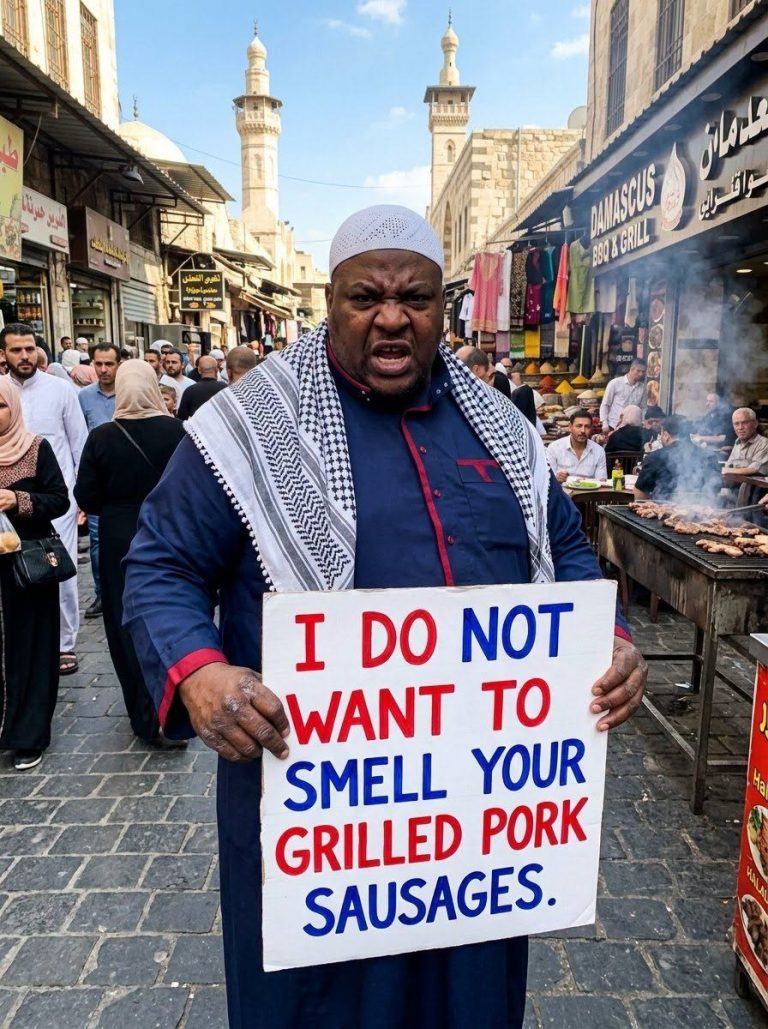
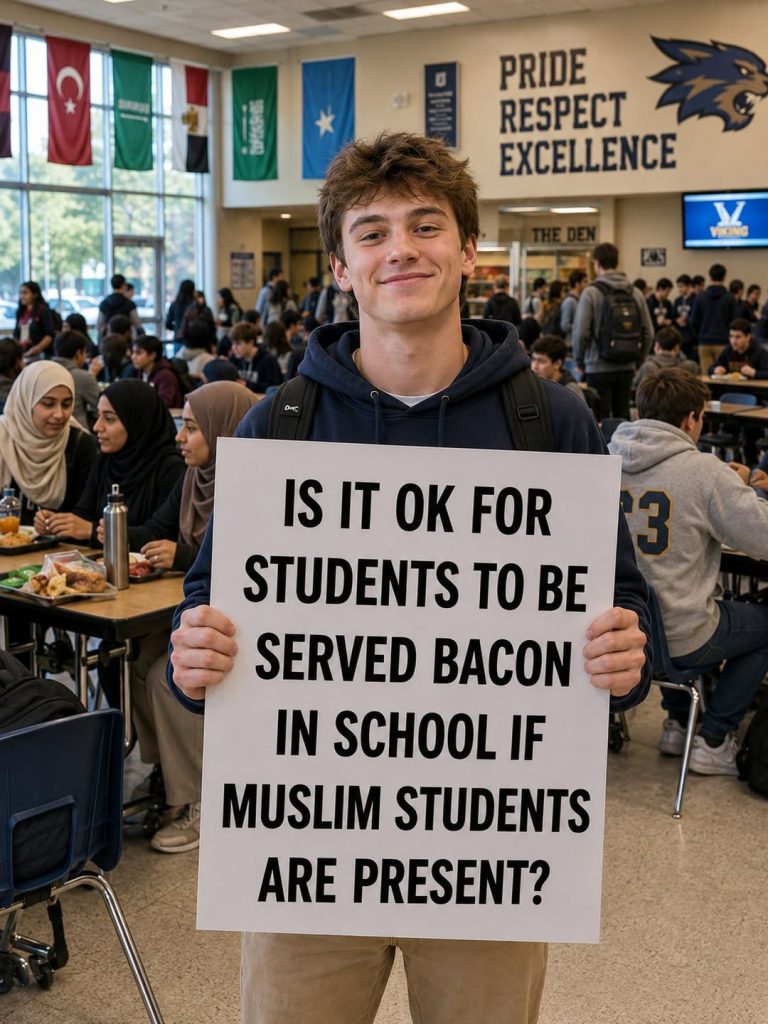
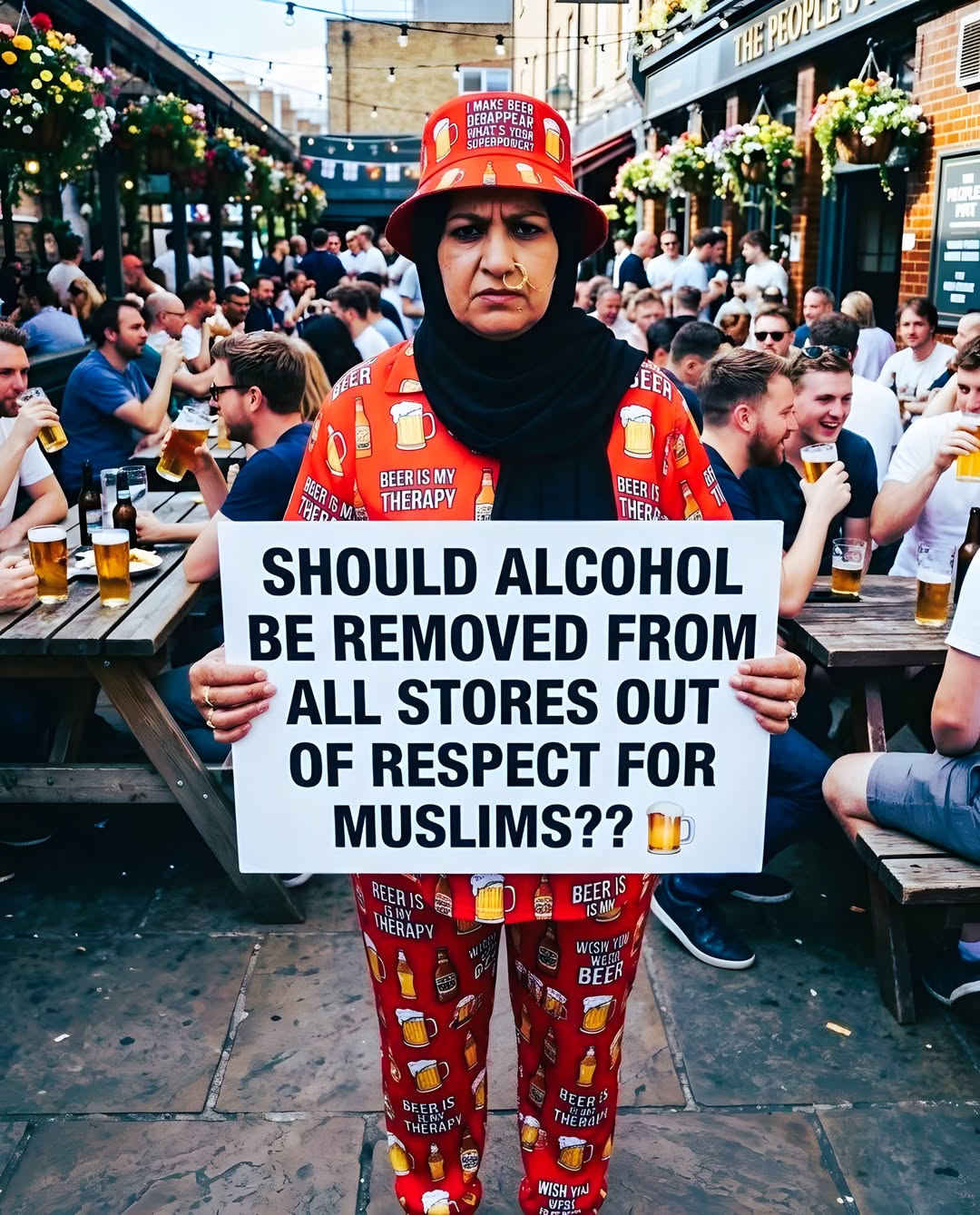
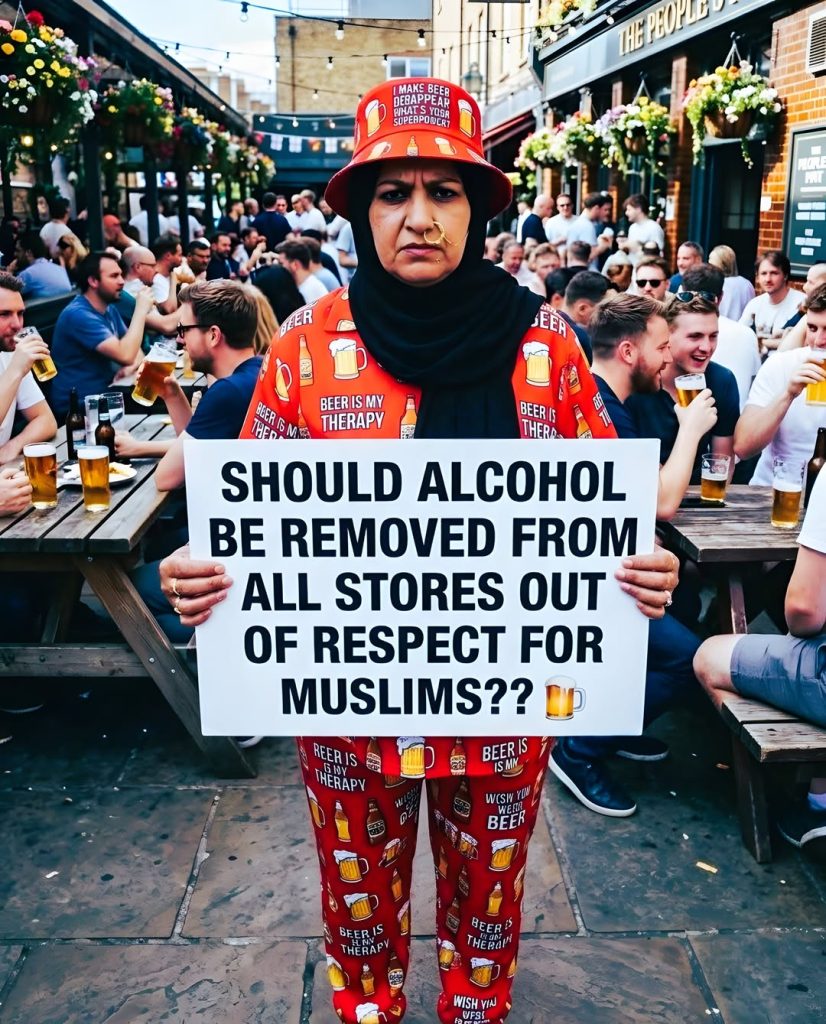
The question raised by the image asks whether alcohol should be removed from stores out of respect for Muslims.
Supporters of this idea might argue that societies should become more considerate of religious values and that reducing alcohol availability could also have public health benefits, such as lowering alcohol-related accidents, addiction, and other harms.
However, many Americans would respond differently.
They believe respecting someone’s religion does not require everyone else to follow its rules. In a country built on individual liberty, people are generally free to choose whether they consume alcohol, just as others are free not to.
From this perspective, respect means allowing each person to live according to their own beliefs without forcing those beliefs onto others.
Many also distinguish between availability and personal choice.
Someone who does not drink alcohol can simply choose not to purchase it. Likewise, someone who follows a halal diet can choose halal foods. Someone who keeps kosher can buy kosher products. These choices can coexist in the same marketplace because consumers have different preferences and businesses respond to those preferences.
Another important principle is the role of private businesses.
In the United States, stores and restaurants typically decide which products to sell based on customer demand, legal regulations, and business considerations. Some businesses choose not to sell alcohol, while others specialize in it. Likewise, many stores now carry halal, kosher, vegetarian, vegan, and other specialty products because customers want them.
This flexibility allows different communities to meet different needs without requiring everyone to make the same choices.
The broader debate is ultimately about balance.
How should America respect religious diversity while preserving individual freedom?
Can people strongly practice their own faith while recognizing that neighbors may follow different traditions?
Many Americans believe the answer is yes.
Respect does not necessarily mean agreement. It often means allowing others to make lawful choices, even when those choices differ from our own values.
The strength of a pluralistic society lies in its ability to accommodate different beliefs without requiring everyone to live by the same religious standards.
Whether someone drinks alcohol or avoids it entirely, the conversation reminds us that freedom of religion and freedom of personal choice are both important values that many Americans seek to protect.
💬 What do you think?
Should businesses simply provide choices for different communities, or should religious beliefs influence what products are available to everyone? Share your thoughts respectfully and explain your reasoning. 🇺🇸