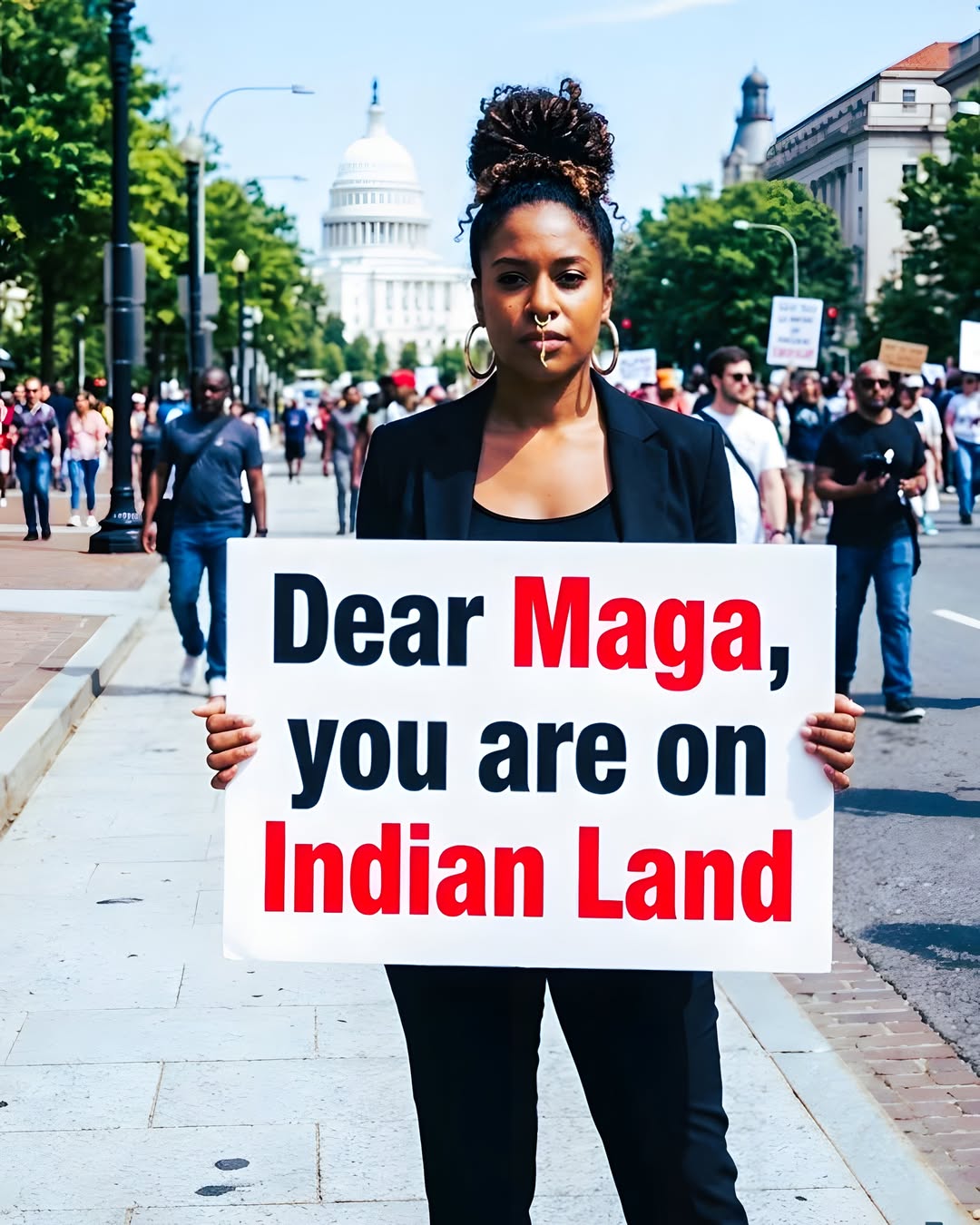
“Can History Be Rewritten? One Sign Is Sparking a National Conversation About America’s Past.”
“Can History Be Rewritten? One Sign Is Sparking a National Conversation About America’s Past.”
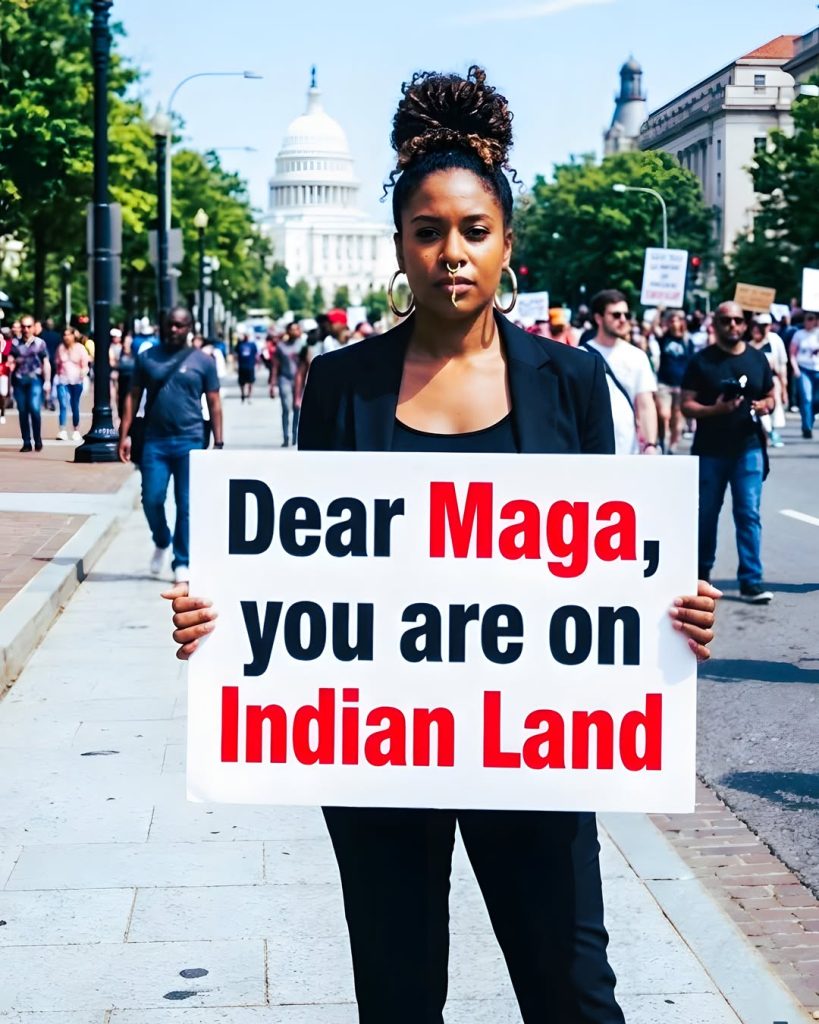 What if someone told you that the land beneath your feet has a much longer story than the one you learned in school?
Some Americans see that statement as an important reminder of the nation’s history. Others believe it oversimplifies a complex past and unfairly assigns responsibility to people living today.
The message in this image has reignited one of America’s longest-running debates—how should the country remember its history while moving toward its future?
Before choosing a side, it’s worth looking at the bigger picture.
🇺🇸 History, Identity, and the Debate Over Indigenous Land in America
The United States has a long and complicated history that stretches back thousands of years before it became an independent nation. Long before European settlers arrived, hundreds of Indigenous nations lived across North America, each with its own language, culture, government, traditions, and relationship with the land.
Many historians recognize that Native American communities inhabited and governed these lands for centuries before colonization. Over time, conflicts, treaties, disease, forced removals, wars, and government policies dramatically changed where many Indigenous peoples lived and how they were able to preserve their communities.
Because of that history, some people use phrases like “You’re on Indigenous land” to acknowledge the original inhabitants of a particular area. Supporters believe these acknowledgments encourage Americans to learn more about Native history, recognize past injustices, and better understand the country’s origins.
Others view the issue differently.
Many Americans argue that while history should be remembered honestly, today’s citizens should not be held personally responsible for events that occurred generations ago. They believe the United States has evolved into a nation built by people from countless backgrounds and that modern Americans should focus on solving current challenges rather than assigning blame for historical events.
Some also point out that history is rarely simple. Throughout human civilization, land has changed hands through migration, conflict, treaties, alliances, and settlement. They argue that nearly every nation in the world has a complicated historical timeline, making it difficult to define ownership using only one point in history.
Still, others believe recognizing Indigenous history does not require assigning personal guilt. Instead, they see it as acknowledging historical facts while supporting efforts to preserve Native languages, cultures, treaty rights, and economic opportunities for tribal communities today.
The discussion raises larger questions:
- How should Americans teach the nation’s history?
- Can a country recognize historical injustices while also celebrating its achievements?
- What responsibilities, if any, does modern society have toward Indigenous communities?
- How can people with different perspectives discuss these issues respectfully?
The United States has often grown through open debate. Difficult conversations about history, civil rights, immigration, and equality have shaped the nation throughout its existence. While Americans may disagree about the best path forward, many share a common goal: building a country that is stronger, more united, and more informed.
Understanding history does not necessarily mean agreeing on every interpretation of it. People can acknowledge historical events while reaching different conclusions about what they mean for today’s society and future public policy.
Whether someone views Indigenous land acknowledgments as an important educational tool or believes they place too much emphasis on the past, the discussion reflects a broader question about how America understands its identity.
Ultimately, learning about history can provide context, but the future of the country will be shaped by how its citizens choose to engage with one another today—with honesty, respect, and a willingness to listen even when opinions differ.
💬 What do you think?
Should America place greater emphasis on recognizing Indigenous history and heritage in public life, or should the nation’s focus remain primarily on its present and future? Share your perspective respectfully and explain why. 🇺🇸