“Should America Change Its Menus to Reflect Every Culture? Millions Have Different Answers.”
“Should America Change Its Menus to Reflect Every Culture? Millions Have Different Answers.”
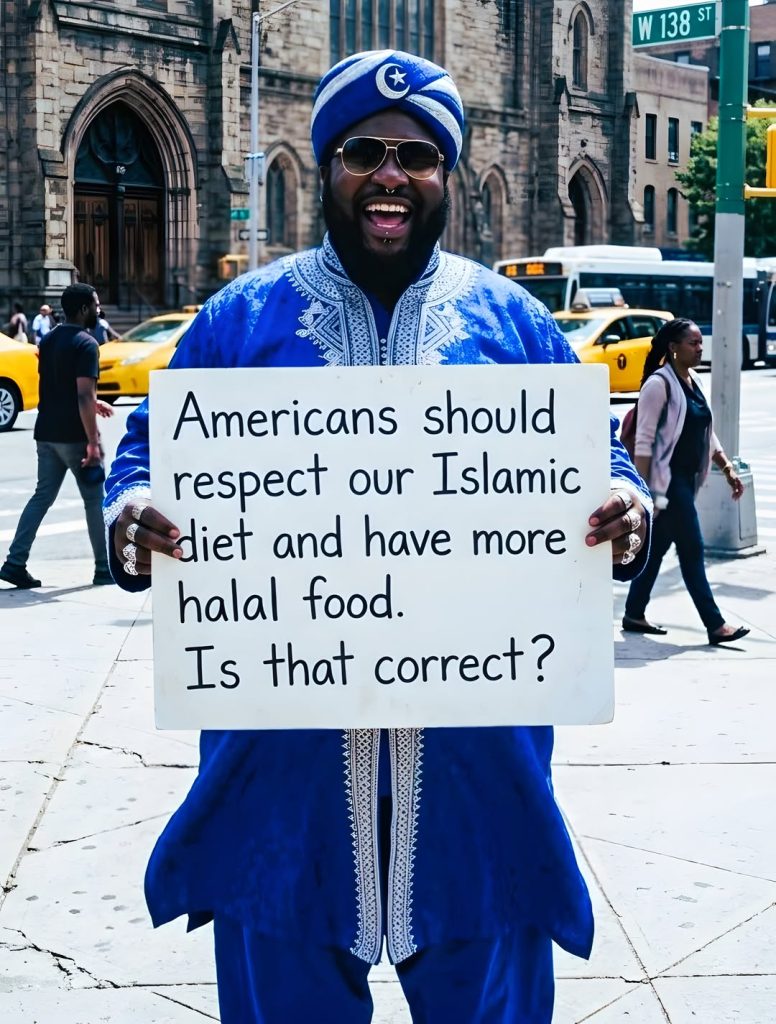 Walk into almost any major American city today and you’ll find restaurants serving food from every corner of the world. But when it comes to schools, public institutions, and local communities, a bigger question often arises:
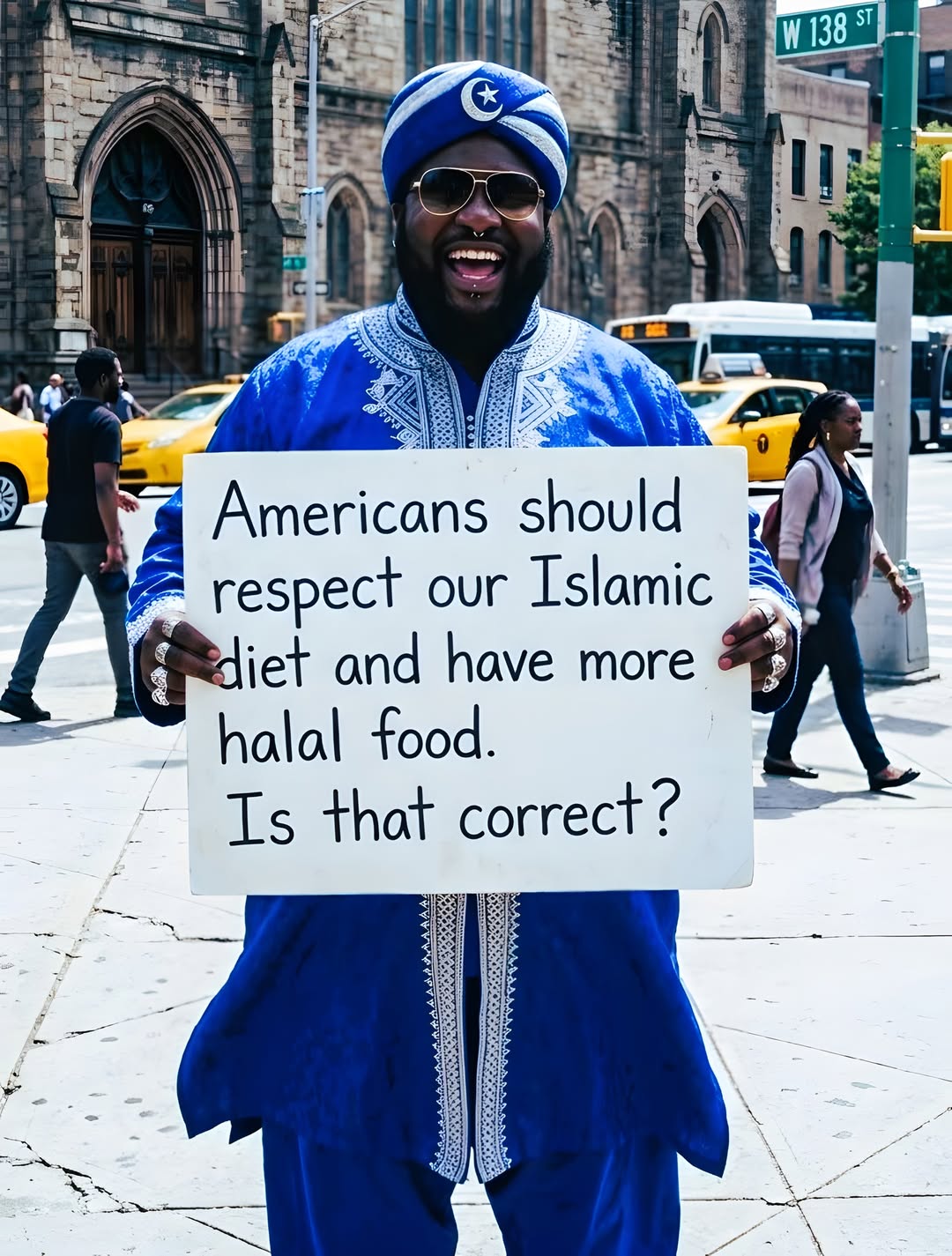
Should America provide more halal food options out of respect for Muslim dietary practices, or should people simply choose from what’s already available?
It’s a conversation about religious freedom, personal choice, inclusion, and practicality—and Americans have very different opinions.
Before deciding, consider both sides.
🇺🇸 Religious Freedom, Food Choices, and Respect in a Diverse America
The United States has always been shaped by people from different cultures, religions, and backgrounds. Over the years, communities have introduced traditions, languages, and cuisines that have become part of everyday American life. Today, it is common to find Italian, Mexican, Chinese, Indian, Jewish kosher, halal, vegetarian, vegan, and many other food options throughout the country.
One question that occasionally comes up is whether more halal food should be available in places such as schools, universities, hospitals, airports, and government facilities.
For many Muslims, eating halal is an important part of practicing their faith. Halal dietary rules guide which foods are permissible and how certain foods are prepared. Like followers of other religions who observe dietary traditions, many Muslim families appreciate having meal options that allow them to follow their beliefs without difficulty.
Supporters of expanding halal options often make several points.
They argue that providing halal meals does not require everyone to eat halal food. Instead, it simply gives people another option. They note that many public institutions already accommodate a variety of dietary needs, including vegetarian meals, allergy-friendly meals, gluten-free options, kosher meals in some settings, and other special requests.
From this perspective, offering halal meals is seen as one way to respect religious freedom while allowing everyone to choose what they prefer.
Others see the issue differently.
Some Americans believe public institutions should avoid expanding menus to meet every religious or cultural preference, arguing that doing so can increase costs and administrative complexity. They believe people should remain free to follow their own diets without expecting public facilities or private businesses to change unless they voluntarily choose to do so.
Many also emphasize that businesses—not governments—should generally decide what products they offer based on customer demand. If enough people want halal products, restaurants and grocery stores will naturally provide them. If demand is limited, businesses may decide not to carry them.
Another important distinction is between choice and requirement.
Most Americans agree that individuals should be free to purchase, prepare, and consume halal food if they choose. The larger debate is whether public institutions or private businesses should be expected—or required—to provide it in every setting.
The discussion reflects broader constitutional values.
The First Amendment protects the free exercise of religion, allowing Americans to practice their faith without unnecessary government interference. At the same time, the Constitution generally does not require private individuals to adopt another person’s religious practices or dietary customs.
That balance—protecting religious freedom while preserving individual choice—is one of the defining features of American society.
Ultimately, respectful coexistence often means recognizing that people may make different choices without expecting everyone else to do the same. Some communities may decide to offer halal options because they serve a diverse population. Others may offer different alternatives based on local needs and resources.
The conversation is not simply about food.
It is about how a diverse nation balances religious liberty, personal freedom, community inclusion, practical considerations, and respect for people with different beliefs.
Americans will continue to disagree about where that balance should be, but respectful discussion remains the best way to understand perspectives different from our own.
💬 What do you think?
Should schools, hospitals, and other public institutions offer halal meal options alongside other choices, or should food offerings remain based primarily on general demand? Share your opinion respectfully and explain your reasoning. 🇺🇸